LG WING: Repositioning a Dual-Screen Device as a Creator Tool Across 21 Markets
I led the influencer strategy and content direction to reposition LG's swivel-screen smartphone, turning an unusual hardware feature into a relatable daily-use story across 21 markets and 3 platforms.
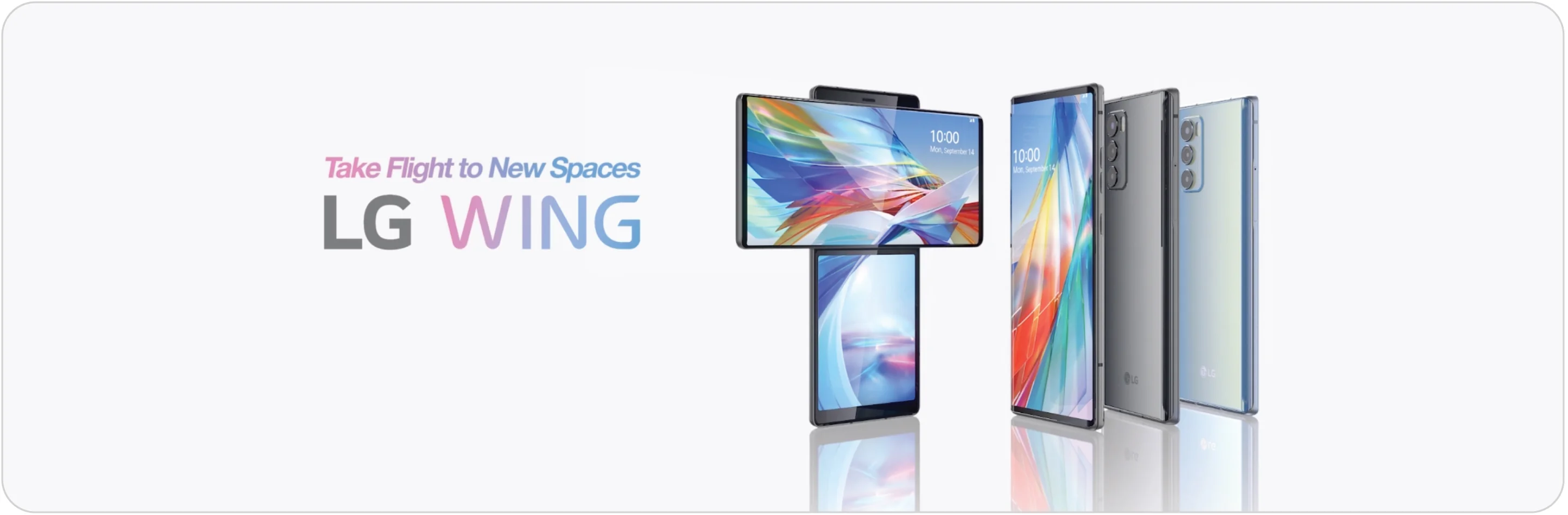
The LG WING's swivel screen had no precedent in the mainstream smartphone market. Most consumers who saw it had one reaction: 'What would I actually use that for?'
The objective was to answer that question at scale, before launch and across 21 markets, by translating a technically unusual hardware feature into specific, relatable daily-use scenarios that made the phone feel like something people already knew they needed.
The strategy hinged on a single insight: people don't buy hardware features, they buy moments they recognise from their own life. A spec sheet saying 'swivel screen with dual-display' means nothing to most consumers. A video of a creator filming vertical content on one screen while reviewing playback on the other is immediately legible.
Four use-case pillars were identified as the most demonstrable and relatable: multitasking (two apps side by side), creator tools (record and preview simultaneously), navigation (maps + music), and entertainment (video + chat). Each pillar was assigned to a different influencer partner, so rather than every creator covering every feature, each one went deep on a single use case that matched their existing content style and audience.
Mega influencers were chosen over mid-tier for this campaign deliberately, and it's the call I'd defend hardest. Mid-tier creators usually win on authenticity and cost-efficiency, and for most launches I'd lean that way. But a genuinely unfamiliar product has a different first problem: not 'do people trust it' but 'do people understand what it is.' Reach and first-impression credibility had to come before niche community depth. The goal was to make the LG WING feel known before it felt loved. Community can be built once the category confusion is gone, but not before.
Each influencer partner received a brief structured around a single use-case angle rather than a general product overview. This was intentional: briefing everyone on the full feature set would have produced interchangeable content. Instead, by assigning one story angle per creator (recording/preview, navigation+media, creator mode, split-screen), each piece of content felt native to that creator's style while still covering the full product story collectively.
Content was delivered across YouTube (long-form use-case demonstrations), Instagram (lifestyle and product integration), and TikTok (short-form, reaction-style demos), with format and tone adapted per platform rather than repurposed from a single master edit.
The 21-market scope meant influencer selection and brief localisation had to account for platform dominance differences by region. TikTok penetration, YouTube viewing behaviour, and content formats that resonate vary significantly across markets, and the rollout reflected that.
Beyond the influencer rollout, the launch also produced LG Mobile's first virtual product unveiling event, replacing the conventional press conference with a digital-native format that became a benchmark for subsequent LG Mobile launches.
Quantitative
- 12M+ total campaign views across YouTube, Instagram, and TikTok
- 4.5x engagement rate vs. LG Mobile's prior campaign benchmarks
- 30% campaign efficiency gain vs. prior LG Mobile launches
- 21 markets reached simultaneously
Qualitative
- Earned media coverage consistently described the LG WING as a 'creator tool,' with the positioning language from the brief reflected in third-party reviews
- The use-case-per-influencer brief structure was adopted as a replicable framework for subsequent LG Mobile influencer campaigns
Figures reflect campaign-level outcomes from the period shown; some attribute to team and agency contributions. Sourcing available on request.
Related expertise
Brand Strategy for Korean SMEs Going Global
Brand strategy for Korean SMEs that need clearer positioning, stronger category framing, and better translation into global markets.
Brand Strategy for Tech Brands With Complex Products
Brand strategy for tech brands that need to turn product complexity into clearer positioning, sharper stories, and stronger market understanding.
Narrative Development for Tech and Product-Led Brands
Narrative development that turns complex tech and AI capability into a story audiences can understand, follow, and remember.
Related essays
What Korean Branding Gets Right (And Wrong) When Going Global
A breakdown of how Korean brands travel globally when positioning is clear and where they lose force.
How Korean SMEs Can Enter the Singapore Market: A Brand-First Playbook
A market-entry playbook focused on positioning, proof, and localization before channel expansion.
Why Foreign Brands Stall in Korea: A Market That Rewards Speed, Not Scale
Why the global HQ playbook breaks down in Korea: velocity, pop-up-driven retail, and a generationally fragmented consumer base.
Working on something like this?
Let's talk →